Showing posts with label research. Show all posts

Monday, October 26, 2015

Introduction: The MBTI

                (This is the introduction to two series: first, an eight part one on the characteristics detailed shortly, then a sixteen part one on each of the 16 different MBTI personality types.)
I have for some time had a deep and passionate interest in the MBTI and what it tells about a individual’s personality. This paper will seek to outline the eight different components that comprise the MBTI, and the sixteen different personality types that those can create. But first, allow me to share what exactly the MBTI is.
                The Myers-Briggs Type Indicator is a test that seeks to make “the theory of the psychological types described by C. G. Jung understandable and useful in people’s lives.”[1] Carl Jung was the original person to come up with the concepts of the MBTI, and his definitions sometimes differ slightly from how they are used in today’s popular test. For the purposes of this paper, we will be using the common definitions rather than Jung’s original ones.
                The test makes a four-letter sequence for each person who takes it. There are two choices for each of the four letters, indicating the personality characteristics of the person. The choices and divisions are as follows: Introverted (I) or Extroverted (E), Realistic/Sensing (S) or Abstract/Intuitive (N), Thinking (T) or Feeling (F), and Judging (J) or Exploring/Perceiving (P). A sample personality might be, for example, ISFP indicating that the person is introverted, realistic, steered by feelings, and exploring. Occasionally people will not tend towards one specific thing in a category – in these instances, the letter is replaced by an X. For example, a person who has both introvert and extrovert tendencies might be XSFP. However, we will be primarily concentrating on, firstly, the eight characteristics, and secondly, the sixteen combinations.


[1] “The Myers & Briggs Foundation,” accessed July 9, 2015, http://www.myersbriggs.org/my-mbti-personality-type/mbti-basics/.

Wednesday, June 10, 2015

Personality Theory Influencers

Introduction
As I started the fascinating volume titled Personality Theories by Barbara Engler, I discovered that from the start, there were several famous psychologists who greatly influenced every aspect of psychology. Their impact is so great that their names are still known by almost everybody in the modern world. Therefore, I decided that a short overview of each of the most influential, along with their psychological approaches, was in order. Allow me to present you with Sigmund Freud, Carl Jung, Alfred Adler, B. F. Skinner, and Abraham Maslow.
Sigmund Freud
                In the year 1856, Sigmund Freud was born as the first child of a Jewish wool merchant living in Moravia.[1] Four years later, his family moved to Vienna where Freud lived until the Nazis took over the city in 1938. From a young age, Freud was a child prodigy in the eyes of his parents. They gave him his own room and he used oil lamps to study while the rest of the family was forced to content themselves with candles. In 1873, at age 17, Freud started in the field of medical studies at the University of Vienna and spent eight years there. He lingered over the topics that interested him, making numerous important discoveries even while in school, and it wasn’t until 1881 that he actually established his own practice as a clinical neurologist.
                Due to his profession, Freud saw many patients with neurotic disorders, and gradually, his interest in neurosis increased. He published his first book, The Interpretation of Dreams, in 1900 – but it was generally unknown at the time. In 1909, Freud traveled to the United States with his friend Carl Jung and they spoke at Clark University in Massachusetts.
                In the following years, Freud continued to create and perfect his theories of psychoanalysis. When he died in 1939 at age 83, he left behind 24 volumes of published works. According to my source, there is also a great deal of material that will not be released until sometime in this century. Whether or not this has yet happened, I do not know.[2]
                Let’s take a few minutes to delve deeper into what exactly Freud’s theories consisted of. Unfortunately, he never completed them – indeed, most of his works have an unfinished feel to them.
                One part of his theory was that humans sometimes subconsciously withhold a strong part of their emotion, especially a negative emotion. He believed that by putting patients under hypnosis, they would then subconsciously and without real thought, share these experiences, resulting in catharsis. This allowed the emotions to be released since they could not be naturally, and would restore peace to the neurotic tendencies of the person involved.
                Freud suggested a number of methods that could be used in his type of study, known as The Psychoanalytic Method of Assessment and Research. Part of this was free association – it’s relatively simple. The person undergoing the procedure is simply asked to verbalize what goes through their mind, however unpleasant it may be. These thoughts are then analyzed and deductions made. Another technique used was the interpretation of dreams and slips – of memory, the pen, or the tongue. We often see these as minor and entirely unimportant, but Freud considered them important and could draw elaborate conclusions from the combination of these two methods. It is from him that we derived the Freudian Slip.
                The concepts of Freud’s best known work are not the above – though they are also interesting and important. He also explored extensively into the ideas of sexuality and how it relates to the actions of a person. At the moment, I don’t wish to delve deeply into his theories in this area. However, Freud assigned stages of sexuality to children from birth to about age seven, and then again beginning around age 13 as they matured into adults. It is my personal belief that most of this is unfounded and unnecessary. However, it is for this work that Freud gained much of his popularity and fame.
                Freud also divided the personality into three parts – the id, the ego, and the superego. He called the id “the core of our being” and considered it to contain our drives and instincts, along with reflexes and psychic energy that powers all our psychological powers. According to Freud, the id is basically uncontrollable by us consciously, and presents itself in newborns, dreams, and some hallucinations. The ego shows itself in meeting the wants and needs of the id. It is here defined as the “intermediary between the id and the external world.” While the id follows something known as the “pleasure principle” (steered solely to find pleasure), the ego follows the “reality principle” (which curbs impulses and portrays the person properly to the real world). Finally, the superego is the center of the ego. It contains the conscience and ego-ideal (an “ideal self-image consisting of approved and rewarded behaviors”). It is the superego that strives for perfection – resulting in it striving towards moralistic over realistic solutions.
                Out of those three, according to Freud, the ego was the controller in a well-adjusted adult. However, since most people are not that “well adjusted,” often the id or the superego start steering the person. The latter “demands instant satisfaction and release” while the former “places rigid prescriptions on that release.” Clearly, being totally steered by either of those is a formidable thought. However, ultimately, relating any of these three of the forms of being conscious or unconscious is impossible. The simplest relation, though not the most accurate, would be to identify the ego with consciousness and the id with unconsciousness.
                Another study by Freud was about anxiety. He identified “reality anxiety” (a generally rational fear of a true danger in the external world); “neurotic anxiety” (fear that inner impulses will rage out of control); and “moral anxiety” (fear of the retributions of the conscience). Freud speculated that the ego developed defense mechanisms to fight against these anxieties. A few of the most well-known include repression (blocking something from expression); denial (refusing to believe something that is real); and projection (the unconscious laying of something unpleasant on another person, place, or object) among others.
                Ultimately, although Freud tested his own theories and discoveries, some of them have caved miserably under deeper scrutiny. So while they may be interesting ideas to consider, it would be unwise to entirely trust any of them without further research into the matter. Sigmund Freud was undoubtedly a unique and fascinating character.
Carl Jung
                Carl Jung was born in 1875 in the country where he spent his entire life, Switzerland. He was raised at first almost as only child – his sister was born when he was nine. So he spent a lot of time playing by himself. He was also a rather sickly child, who spent six months out of school at one point, due to fainting spells. Though he had originally longed to be an archaeologist, he couldn’t afford to go to school for it and instead attended the University of Basel and worked on a medical degree.
                While there, he at first planned to turn his degree towards working in surgery, but happened to read a textbook by a German neurologist. It piqued his curiosity, and his interest began to turn towards that work instead. Eventually, he arrived in Zurich, where he worked with a psychiatrist, and then later became a lecturer at the University of Zurich. He met Sigmund Freud in 1907 and was very impressed with him and his work. It was with him that he traveled to Clark University in the United States.
                However, by 1913, Jung and Freud had too many disagreements, especially on the matter of sexuality and its influence in psychological matters. Jung left Freud and his work, and eventually became engrossed in self-analysis. He continued on to develop analytical psychology and wrote extensively. He continued to research and write throughout his life. In 1961, Jung died, having changed fundamentally the thoughts of the world in relation to psychology.
                Jung saw the personality as “a complex network of interacting systems that strive toward eventual harmony.” However, he managed to make this complex network fairly understandable for any person. He split everything into two attitudes and four functions. The two attitudes were extraversion and introversion. These are differentiated by whether the person is oriented towards the outer or inner world. Were they more comfortable with the outer world of people and things or the inner world of concepts and ideas? This is what Jung asked.
                The four functions were sensation and intuition, and then thinking and feeling. The first two, sensation and intuition, were based off of how people gather their data and information. Those who are sensors use the five senses more and prefer facts and realities. Those who are intuitors tend more towards relationships and possibilities and meanings. Thinking and feeling are more about how people come to judgments and conclusions. Thinkers use logic and impersonal analysis, while feelers are more oriented towards personal values, attitudes, and beliefs. Jung’s theories allowed the two attitudes to be combined with the four functions for a total of eight different psychological types.
                Jung also thought and wrote about numerous other psychological aspects. For example, he coined the persona and the shadow. The persona is the mask that people wear to be acceptable in their society. It is “a compromise between one’s true identity and social identity.” Of course, one must not identify either too much or too little with the persona, for the consequences are either becoming entirely the persona or becoming asocial. The shadow is the unsocial thoughts and feelings that a person may have. One way to put it might be as the devil within. It is from the shadow that things like prejudice may arise. Jung “suggested a need to come to know our baser side and recognize our animalistic impulses.” He believed that it resulted in “dimension and credibility” and “increased zest for life.”
                Jung had numerous other theories that are more complicated than the ones detailed here, so for the present, I shall not expand on them. However, they are fascinating and I encourage my readers to pursue a deeper knowledge of them. One to note especially is that Jung was one of the first people to think of the word-association test frequently used today.
                His studies into neurotic psychology and psychoanalysis are more widely known than most people realize. For example, the MBTI test. MBTI stands for the Myers-Briggs Type Indicator. It was formed by Katherine Briggs and her daughter Isabel Briggs Myers. It was created to make Jung’s ways of sorting people even simpler for the general population. It consists of four sections, each with two things, which can be combined in a total of 16 ways. They are: Extroversion-Introversion (represented by the letters EI); Sensing-Intution (SN); Thinking-Feeling (TF); and Judging-Perceiving (JP).
                One of the wonderful things about the MBTI test is that anyone can read through the definitions for each letter and probably choose one or the other that they identify with the most. The MBTI test comes in very handy for employers, as they can figure out how to work best with various personality types in the workplace. It also has applications in numerous other settings.
                Jung influenced our culture in many ways, both those that we realize and those that we may not. He was a person with a brilliant mind who contributed greatly to the world of psychoanalysis. While some of his theories and interests (in things like alchemy, dreams, and astrology) were a little strange, for the most part, many of his discoveries are still applicable today.

Alfred Adler
                Alfred Adler was born in 1870 as the second of six children. He had rickets at a young age, making him generally clumsy and awkward. Besides that, he was run over twice in the street, and later came down with pneumonia. It is little wonder that he described his childhood as unhappy and hard. School was not his forte, and his teacher suggested he become a shoemaker – but his perseverance paid off and eventually, Adler moved on to the top of his class, especially in such matters as math. In addition, he gained an appreciation for the company of others.
                Like Freud, Adler studied medicine at the University of Vienna. He centered at first on becoming an eye specialist, but he eventually became a practicing neurologist and psychiatrist instead. In 1902, he joined an elite group brought together by Freud to discuss psychoanalysis. Adler later became the first president of the group, named Vienna Psychoanalytic Society.[3] Unfortunately, by 1911, Adler disagreed deeply with some of Freud’s psychoanalytic views, and along with about a third of the society, he left the group. He went on to be a soldier in World War I, and then to assist the government in child guidance establishments in Vienna. Throughout the 1920s and 1930s, he continued to practice in Vienna – the same place as Freud, but they avoided each other.
                In 1935, Adler moved to the United States, working as a professor of medical psychology at the Long Island College of Medicine. In addition, he maintained his own private practice of neurology and spoke in many places. He was on a tour in Scotland, speaking across the land, when he had a heart attack and died. It was 1937 and he was only 67 years old.
                Adler had a special import to lay on the effects of human culture and society on the individual human. He called it “social interest” – this denoted the want held by humans to adapt to whatever is accepted in their culture. Adler also believed that everything any human ever did was aiming towards some goal, every thought, feeling, and action. He called this pursuing of a goal “finalism.” Beyond this goal-driven mindset, Adler theorized that the human psyche has a built-in “goal of superiority,” in which we strive constantly to be made whole. Contrary to how it may sound to us, the goal of superiority is not to be better than all our peers, but to be good and competent at what we do.
                Four groups of people were coined by Adler, four groups of people who strove for the goal of superiority. They included ruling type (who were aggressive people with little care for those around them); the getting type (people who take but do not give); the avoiding type (people who try to avoid the problems of life and most human interaction); and the socially useful type (the people with “a great deal of social interest and activity”). Unsurprisingly, he called three of these the “mistaken styles”.
                One very interesting area that Adler studied was birth order. While he didn’t go into stages of development as Freud was fond of doing, he did hypothesize about the difference made by “family constellation,” or the position of a person within the family structure according to birth order. He decided that “older children tend to be more intelligent, achievement oriented, conforming, and affiliative.” They generally have more interest in power, and in the past. Second or middle children are more likely to feel a need to catch up with their older sibling. This makes them often competitive and motivated. Lastborn children are often “more sociable and dependent, having been the ‘baby’ of the family.” However, they may become competitive in order to pass their older siblings. Care must be taken to not spoil or pamper the youngest child. Adler was the one who fully created a theory of sibling rivalry. Often only children tend to be most like oldest children – they spend more time in the company of adults, and enjoy being the center of attention. Adler also warned, however, that often only children are the most likely to be pampered, and stated that pampering was “the greatest curse of childhood.”
                While the dynamics of the family constellation change by the family, the gender of the children, and the number of years in between them (among other factors), there is some solid truth to what Adler concluded. Sibling rivalry is very real, no matter the size of the family. Oldest children can be quite stereotypical, as can each of the others. Adler stated that family atmosphere does make a difference in determining the ultimate temperament of a person.
                Adler considered his concept of “creative self” to be the greatest accomplishment of his life, and the climax of his theories. To put it concisely, “the creative self establishes, maintains, and pursues the goals of the individual.” Adler’s theory on this matter only reinforced his belief that “human nature is essentially active, creative, and purposeful in shaping its response to the environment.” He believed that we were conscious of what we do, unlike Freud and Jung, and could control ourselves and understand ourselves quite well.
                It was Adler who coined the terms “inferiority complex” and “superiority complex.” Both of these refer to how a person may respond to either real or imaginary feelings of inferiority or superiority. He believed that people used these complexes as a way to protect themselves from often unreasonable fears.
                Alfred Adler was a brilliant man who made several ground-breaking discoveries and theories over the course of his lifetime. While some of his theories may have not been entirely concrete, they have contributed greatly to our culture today. Without him, it would have been much later before the links between personality and birth order, among other important topics, were discovered.
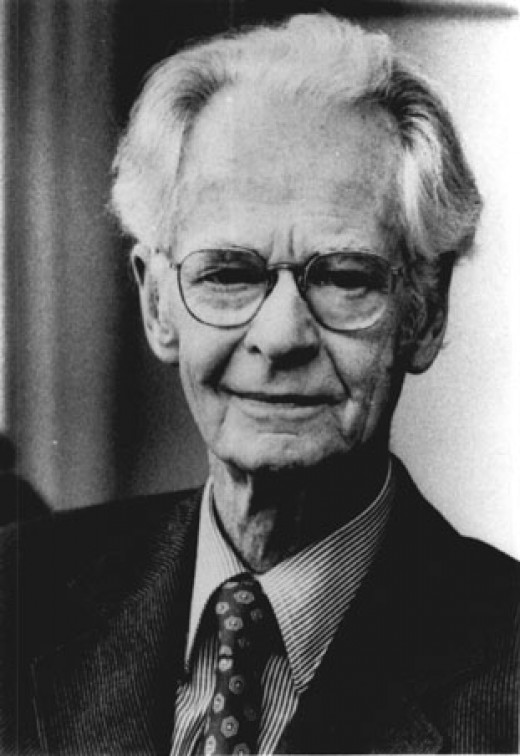
B. F. Skinner
                B. F. Skinner, born Burrhus Frederick Skinner, was the child of a lawyer and his wife. Born in 1904 in small town Pennsylvania, he grew up in a peaceful home that was endowed with the ethics and morals of America. As a child, Skinner was brilliant, inventing a number of electrical machines. In addition, he harbored an interest in animal behavior, a study which served him well later in life. However, when he went away to Hamilton College, his major was English. At first, he longed to be a writer – but when he decided to take a few years to work on his writing, he soon became frustrated and chose to instead pursue further degrees at Harvard and work on graduate studies in psychology. He earned his Ph. D. in 1931.
                Following that momentous event, Skinner went on to teach at the University of Minnesota for nine years and then to be the chairman of the psychology department at Indiana University before going back to Harvard in 1948. By that time, he had become a well-known psychologist and wrote an influential book, titled Walden II. He died in 1990 from leukemia. He was 86 years old.
                Skinner did not focus on the inner aspects of personality, but on the impact made by the environment on the personality. One example given is that rather than trying to figure out how hungry a person is, Skinner would try to determine what variables and outside effects would affect that hunger. To this means, he would ask questions such as “when was the last meal eaten?” and “what are the consequences of the amount of food consumed?”
                However, what Skinner is known best for is probably his theories concerning the development of behavior through learning. One of his key words was “reinforcement.” Anything that makes someone or something want to repeat a specific behavior is a positive reinforcer. Skinner also noted the difference between two types of behavior, respondent and operant. The former are behaviors that are in direct response to a stimulus – for example, a reflex. Operant behavior is a response that is not necessarily replying to a stimulus. In other words, it is made freely.
                Skinner also used a method known as shaping to get the behavior results he wanted from the animals he worked with. This involved providing reinforcements that helped to mold the animal’s behavior. This created a belief in Skinner that most or all human behavior is made by operant conditioning. He went on to experiment with numerous other types of reinforcements as well.
                Along with Sigmund Freud, B. F. Skinner was one of the most controversial psychological theorists to ever exist. His beliefs about behavior, conditioning, and shaping have changed the way our culture thinks about important issues. In addition to that, some of his practices have been implemented in mental institutions and rehabilitation centers, used to help the patients behave in acceptable ways.
Abraham Maslow
Abraham Maslow was born in 1908 in Brooklyn, New York. His heritage was Jewish and he was the first of seven children. It was early in his life that Maslow began delivering newspapers. Sadly, he wasn’t close with either of his parents. He liked his father well enough, but was also afraid of him. His mother seemed to hate him, favoring his younger siblings constantly. The only love that was consistently given to Maslow was from one of his uncles, who devoted time and energy to him regularly.
Maslow did well in the public schools in which he grew up, and after graduating, began going to the City College of New York. At the time, his father compelled him to study law and his grades fell, due in vast part to his lack of interest. Eventually he went to the University of Wisconsin. About the same time, he married the girl he truly loved, to the disappointment and disapproval of his parents. Maslow went on to earn his Ph. D. there in 1934, and then returned to New York to work as a research assistant and then a professor at Brooklyn College. In 1951, Maslow went on to teach instead at Brandeis University, and stayed there for 19 years. It was in 1970 that Maslow died, having established something that would be become well-known throughout American culture, known as Maslow’s Hierarchy of Needs.
Maslow categorized the needs of every human as B-needs and D-needs. The latter were deficiency needs; the former were being needs. The latter had to be satisfied before the former could be. The needs were as follows: physiological needs; safety needs; belonging and love needs; self-esteem needs; and self-actualization needs (which were the only B-needs). He stated that the first listed needs, the biggest D-needs, had to be satisfied before the other needs could be considered. Physiological needs are the needs for “food, drink, sleep, oxygen, shelter, and sex.” If these needs are not satisfied, the others cannot be. After them come the safety needs, which are often seen most clearly in children and people who live in an unsafe environment. Insecurities arise when the need for safety is not met. Then come the belonging and loving needs – the need for love, affection, and trust in relationships. These needs can be difficult to fulfill in a culture that has so much of life in a digital form.
The next two needs can be slightly more difficult to understand: the D-need of self-esteem and the B-need of self-actualization. The self-esteem need has two parts – “the need for respect from others and the need for self-respect.” If these needs are not met, often feelings of discouragement, inferiority, and weakness will follow. “Healthy self-esteem is a realistic appraisal of one’s capacities and has its roots in deserved respect from others.” The final need, for self-actualization, is the hardest to encapsulate. It is easier to describe a person who has been self-actualized.
Maslow tended to move more towards philosophy than merely the actual definitions of “pure science.” Indeed, “theories that entail self-actualization deal primarily with issues of moral philosophy rather than psychological science.” He also tended, especially near the end of his life, to have more of an interest in spiritual and religious things than many scientists do.
Maslow’s Hierarchy of Needs is widely known and remarkably popular. Whether or not it was an entirely accurate hierarchy is debatable in some circles. However, it has certainly influenced the world of science in the modern day.
Conclusion
Men like Sigmund Freud, Carl Jung, Alfred Adler, B. F. Skinner, and Abraham Maslow have all had a great deal of influence on the world of psychology. While clearly some of their “findings” and beliefs were entirely off-base, each of them is also fascinating to study and things can be learned from them. They were brilliant men with impressive brains – however, they were men and sometimes went astray.


[1] Moravia is a small town in the country that later became Czechoslovakia. This later divided into the Czech Republic and Slovakia; Moravia is in the Czech Republic.
[2] The book was published in 1995.
[3] Eventually this group became what is known as the International Psychoanalytic Association.

Body Language


Introduction
                Body language is a mode of communication that we all use daily. Much of what we communicate using body language is subconscious. We do not realize that we are communicating it, and we do not always realize where our subconscious feelings about others come from. However, learning what to look for in the body language of others, and learning how to control our own, can be a valuable skill. For this paper, I watched all the YouTube videos I could find, read a variety of articles, and absorbed all the information I could. The paper includes a special emphasis near the end on the effects of color, and what it can say about a person – this falls under the more general category of non-verbal communication, but is included here none-the-less.
                Before I begin, I want to remind you, dear reader, that body language is not an exact science. Really, every statement that I make in this paper should probably be qualified with a “may mean” or “perhaps” or the like. There are multiple possibilities for almost every sign given. As one article stated, you are better at the body language of your friends than any body language expert could ever be. Knowing someone and their habits is the best way to read them. However, these signs can occasionally be indicators…and it is for those occasions that this paper is written.
                Why trust body language? For one thing, it is harder than words to control. Words are easy to manipulate. It is simple to say what you want others to believe. It is far more difficult to control your body language. This applies most particularly to micro-expressions, which we shall learn more about shortly. People also show things called “tells.” Tells are any subconscious action or expression that gives away real feelings. Women have more tells than men, because they are more emotional and because they speak more with their hands. Therefore body language is generally more difficult for women to control.
                It is important to be aware of your body language. If you aren’t, you may end up sending the wrong message. Where are you putting your hands? Are they distracting the person you’re talking to? This is especially important to realize in a business situation.
Face
                Let us begin with the face, one of the most up-front presenters of body language. Micro-expressions and normal expressions give away many things about the person they belong to. A lot of body language and what we deduce from it comes from the face.
Micro-expressions are so small that they are always difficult, and often impossible, to spot in a normal conversation. They can be seen occasionally in paused videos. These give away the true feelings of the person who makes them. Micro-expressions only linger for 1/15th or even 1/25th of a second.
Micro-expressions are easier to spot if you know what you are looking for, since the person you are in contact with will not be able to hide them entirely. Emotions are strong, and your emotional brain will process before your rational brain. Hence, there are micro-expressions. A miniscule raising of the lip portrays contempt or superiority. Wrinkles around the nose convey disgust.
                There are seven universal face expressions, all of which can be seen in both micro-expressions and normal expressions. They are fear, disgust, contempt, happiness, anger, sadness, and surprise. One reason that micro-expressions are so hard to see is that they are often hidden emotions – but why are they hidden? There are two primary possibilities. Either they are hidden on purpose and another emotion displayed (deliberate concealment), or they are not even known to the person who subconsciously displays them (unconscious concealment).
If the lips and/or chin are quivering, it is quite definitely a sign of nervousness or tension. This can also be signified by a furrowed forehead or squinted eyes.
                Another common emotion that can be easily spotted is disagreement or disgust with someone or something. One of the most common tells for this emotion is an eyelid flutter, especially when someone says something with which we disagree. Pursed lips are another sign – one that can be seen even in babies who are as young as four weeks old! Pulling up just one side of the lips and nose can show the same thing. Squinting eyes are also occasionally an indicator, but not as definitely – they can convey many things.
Your gaze is an important part of the impression you give. Socially confident people, who are often extroverts, are usually good at holding eye-contact. This can also be a way to show dominance. People who are shy are less likely to hold eye-contact. Sometimes, you can spot a liar when they maintain eye-contact for too long – this is over-compensation since they feel guilty. Trying too hard can ruin their front.
A real smile can be identified by looking to see how the wrinkles around the eye behave. It is difficult, if not impossible, to force these to wrinkle for a fake smile. The eye-cover fold should also drop to the inside of the eye in a manner that is impracticable to duplicate. Note that these characteristics are not true in all people – picking out a fake smile on someone will become easier according to how well you know them. Watch the eyes – they give away the truth. When a person holds their lips tight, it conveys disapproval and disagreement with what is being said. When the lips are also bitten, it is often a sign of lying.
Deception can sometimes go hand in hand with smiling. Smiling usually seems confident and relaxed, while liars are associated with anxiety. So a fake smile is supposed to cover that anxiety, and appear confident and at ease. Smiling is a handy way of hiding most emotions.
What are some of the signs of deception? The average reader will be familiar with many of them. Various gestures or changes in composure can signify deception. A faster rate of blinking can do the same, as can a notable loss of calm. Minor changes in movement can have significance, and so can a variance in voice pitch. If several of these things, especially three or more, happen at the same time, it is likely that some deception is being played. However, if there is only one sign, it can quite possibly be merely coincidental. Be careful as you watch body language, especially if you are looking for deception – conclusions are easy to jump to and not always correct.
When you meet someone, your brain instantly places them in one of four categories: enemy; friend; sexual partner; or indifferent. Most people go into indifferent, but occasionally someone will immediately enter one of the other sections. Other people are also making these instant deductions about you, so it is important to come across as a friend from the beginning. Face expression is a huge part of that. The most important way to come across as a friend is to smile. But watch that smile – if it’s fake and too toothy, it can scare people away. Instead, allow your smile to build over a space of about three seconds, and sustain it for the same amount of time – but this can vary by situation. However, a natural smile is always best. In addition, lifting your eyebrows slightly can also convey friendliness and interest.
It is possible that when someone lowers their head and stares at the floor while speaking to you, they are hiding something. It could also be that they are deep in thought. Lowering the head can communicate shyness, and in some cultures, respect. Staring at the ground could show that someone is upset, and it is also an easy way to hide emotions that tend to pour from the eyes. As has been stated, the eyes tell the truth.
                Some gestures are done to relieve stress. For example, a constant touching of the nose or eyelid can be one sign. Stress relief can also be shown by various nervous twitches and other repetitive movements that may become natural habits after a while. Uncontrollable blinking or facial twitching can also signify stress relief.
Some face things are stereotypes. Somewhere in history, they have been true and possibly still are sometimes in modern day. Movie directors use these associations, further cementing them into our brains as stereotypes. For example, people with big noses can be seen as untrustworthy. Those with thin lips may be insincere. However, since these are natural physical features, they cannot be strongly trusted in body language.
Core of the Body
                If you are in a situation where you need to come across as confident, there are several things you can do. Always stand straight. Rounded shoulders and crossed arms do not communicate energy or confidence, and those characteristics are important, especially in a situation like a job interview. Your core is vital. Slouching always sends a bad impression.
                It is important, especially for women, to be more assertive than they sometimes are naturally, especially when in a business meeting. This can be accomplished by leaning in, maintaining eye contact, keeping the shoulders back and not rounded, and generally portraying confidence. Sometimes it can also help to occupy more space, rather than curling into a tight area as is easy to do naturally. Using your upper body conveys a sense of energy, and can make you seem more in control and in charge.
Your core is extremely important, whether or not you are trying to convey something specific with your body language. If, while seated, you are leaning back, it can come across as lazy or arrogant. But if you are leaning too far forward, it can be aggressive. This really depends on the situation – more often, leaning forward shows that you are interested and listening to what is being said. It can also show a positive and friendly attitude, as well as comfort with the speaker.
We have already discussed shoulders at some length. However, it is extremely important to remember that putting the shoulders too far back may be a show of confidence that comes naturally – or it may be an overcompensation for a lack of confidence. Having rounded shoulders is a likely sign of low confidence and self-esteem, and it is absolutely terrible posture. Consider how in the army even at the “at-ease” pose has the hands behind the back. This is because when your hands are in front of you, it tends to round your shoulders automatically, whereas this is nearly impossible to do with your hands behind you.
Hands & Arms
                The first four minutes of meeting someone are the minutes when you make your overall decision about them. Will you like them? Will you get along? Eighty percent of your opinion about them, and their opinion about you, is formed within those first minutes. And a big part of that is formed from the handshake. In fact, there are more connections between the brain and the palm than the brain and any other part of the body.
Your handshake clearly says a lot about you. In general, shaking more than three times is awkward. A good handshake is “web-to-web” – have the web between your thumb and pointer finger firmly clasped with that of the other person. Women, never extend merely your fingertips unless you are royalty and expect them to be kissed. Since my readers are not royalty, the fingertips should never be given in place of a handshake. The handshake should have your hands parallel. If either of you has the literal upper hand, it can be a very dominant move. A handshake will probably inspire one of three gut feelings. If their hand is on top of yours, you will likely feel dominated. If your hand is on top of theirs, you will feel strong and superior. And if your hands are parallel to each other, as is optimal, you will be equals. So when shaking hands, keep the pressure even and your hand straight.

On a side note, you can see this dominant handshake in a variety of political situations between world leaders. Occasionally, you can see a fight going on for who has the literal upper hand. If a picture is being taken, both people will want their right arm to be facing the camera, as it automatically gives the upper hand in the picture.
The hands should mirror each other in a normal handshake, avoiding dominance from either person. However, if someone does attempt to give you a dominant handshake, there are several ways to counter it. When you are shaking hands, and they are dominating, you can take a step forward and place a hand on their shoulder or arm, or directly on top of their dominant hand. Any of these moves will instantly change the situation, placing you in the more domineering and controlling position. Consider – what does your handshake say about you?
Studies on 2-4 year old children produced interesting facts about what we automatically do with our hands and arms in certain situations. For example, the children were placed in an environment they were familiar with – a doctor’s office. The children would be comfortable at first, but when the doctor arrived, they tended to go into a defensive stance, protecting their bodies by crossing their ankles and their arms. This is natural protective behavior, and not something we are taught.
In a way, the women of our culture are taught to use gentler and less decisive body language. Often they will only talk from the elbows down when they are in a business situation. However, this portrays an image that is very different from what they need to communicate. Compare that to the way men conduct themselves in the same business environment. They talk big, moving freely. Many women use apologetic body language when in a business environment, which is not conducive to their image there. This apologetic body language can be shown when their thumbs are by the seams of their pants or skirt; or they may carry their hands in front of them and round their shoulders.
                When in a meeting, where should you place your arms and hands? This question can be difficult. Do not allow your hands to be touching your face or preening your hair. The best place for them is on the arms of your chair. If your chair doesn’t have arms, crossing or folding your hands on the table can also be good.
Women in the workplace have a number of things to be careful of, so if you are a man reading this paper, these pointers are not for you. Women, do not allow yourselves to relapse into a limp handshake. Keep it firm. In general, hugs in business are not appropriate. It is easy to stop someone who is coming in for a hug with a hand outstretched as is for a handshake. Be firm about this. Hugs are not part of the professional world, unless there is a unique and special relationship.
A natural movement of expansion is displayed by humans when they feel power, pride, or have a physical achievement. Consider the actions of a football player who has just scored. Probably his arms are high in the air and far apart, and his chin slightly lifted. This is true of almost anyone in athletics who has just done something wonderfully right. Assuming a position like this can equip you with more powerful feelings. For example, according to one source, if you are nervous before an interview or similar situation, take a quick bathroom trip and stand for a few minutes with your arms wide apart, taking up as much space as you can. Doing this for two minutes will give you more confidence than sitting tightly in a chair. Just pretending to be more powerful can make you feel more powerful.
If you are directing a large group of people, your body language can make them more or less willing to comply. For example, if your palms are up as you gesture, they will be more willing to move and will see moving as more fun. If you point decisively, and have your palm sideways, you are insulting their intelligence and come across as bossy. And if your palms are down, it can inspire defiance and dislike for you. Having the palms down conveys power – consider, for example, Hitler’s salute. If all the people had done the same salute but with their palms facing up, it would have been far less menacing and powerful.
If your hands are doing a lot of chopping and pointing, the people to whom you are speaking are less likely to comply. Your hands will communicate as aggressive. One source that I referenced said that steepling your fingers or talking with your palms facing up should be avoided, as it can be seen as showing weakness or begging. This may be true in an interview atmosphere. More often, tapping your fingertips will be a power move and show authority, and talking with your palms up will communicate openness. However, as you should know by this point, most moves can be interpreted in a variety of ways depending on the situation.
Placing your fingertips together can inspire confidence. This is another “secret” power move. Even if you don’t feel confidence, tapping your fingertips can boost your feelings, while conveying poise to those with whom you are dealing.
One way to show friendship is to display your open, empty hands. This communicates a lack of weapons at an instinctual level. When your hands are extended, they aren’t protecting your belly. This conveys truth, honesty, and vulnerability – all good first impressions.
Arms crossed is often cited as a move that is aggressive. This is can be true on occasion, but as often as not, it is used as a comfortable way to sit or stand. It comes very naturally to some people. However, if the person with crossed arms is also standing with their legs shoulder-width or more apart, it is probably meant to convey toughness and authority, along with aggressiveness. This may be sub-conscious.
Touching the neck conveys protective or nervous feelings. It shows insecurity. It is also a very low-power gesture. If you are working to be confident, avoid touching your neck.
Placing the arms behind the head or neck can communicate ease and rest. However, when the hands are nervously touching the neck, it shows an awkwardness with the situation. This is called self-touch. It is especially noticeable if someone touches the back of their arms, the side of their neck, their nose, or other body parts. Self-touch is a comforting gesture to most people, demonstrating that they are uncomfortable with the situation. According to one source, self-touch shows the levels of our “sympathetic nervous system’s flight-or-fight response.” So when emotions are strong, self-touch is usually present, reflecting that in some way.
Legs & Feet
                The feet and legs are often a clear indication of where a person’s attention is pointed. Usually, when people are standing, their feet will be angled towards whoever they are paying attention to, be it someone standing across from them or someone else. The same can be true when people are seated. Which direction do their knees point? Or their feet?
                What you do with your legs when in a business meeting is important. Crossed legs is actually physically unhealthy. If you are a woman and wearing a skirt above the knee, it can also be seen as provocative, which the last thing you want to convey in a business atmosphere. Instead, it is best to place your feet 3-4 inches apart on the ground. Be careful about crossing your ankles no matter what you’re wearing, as it can make your knees fly. Remember to always be conscious of your legs when you are seated.
                The position of a person’s feet while sitting at a round table, particularly in a cafeteria or similar circumstance, can tell about the part they will play in the conversation. Of course, as has been stated, this is not always true. However, my own observations did back up these statements. For example, if a person is sitting with their ankles crossed under the chair, they may be hesitant to join in the conversation. If their feet are wrapped around the legs of their chair, they are probably not very talkative, and may take a minor part if any in the conversation. The exception is when their feet are wrapped around the chair legs and the entire core is learning forward – it is then more likely that they are a vibrant part of whatever is being said. Often the leaders of the conversation, the people who start, end, and define it, are the people who have their legs crossed or stretched directly in front of them. They are generally quite engaged. But remember that the position of a person’s feet and legs is always affected by the shoes they are wearing, the bars on the table or chair, and other things.
Crossing the feet at the ankles can show that someone is at ease. In addition, increased foot movement can demonstrate that someone is lying, or becoming more uncomfortable with their surroundings. It can also show nervousness and/or anxiety.
Clothes & Color
                Certain attire can affect your body language and your productivity. For example, for women, the way they sit when wearing a tight skirt versus wearing dress pants will differ. Longer skirts are more comfortable and generally come across as more professional than something shorter. Certain modes of dress allow the wearer to lounge, rather than maintaining a proper posture. Jeans and a t-shirt make you sit very differently than a tailored suit or formal dress. Business attire has been shown to actually help productivity in the office.
                Suit color can make a difference in the world of business. Studies have shown that in the Midwest, the South, and most places in the United States, the most popular suit color for successful women is navy blue. The second most popular is charcoal gray, with third being either chocolate brown or black. However, the order of these colors changes when women in large cities such as New York City and San Francisco are surveyed – there, the most professional color is black, followed by navy blue, and then gray. Brown is not included. Merely wearing the right color of suit can help land a job or make the best impression on an important person.
When analyzing people by the colors they wear, or when deciding what colors to wear yourself, it is crucial to remember that this is swayed a great deal by skin tone and often by personal preference. Many people have colors that they never wear, simply because it would look horrible with their skin or hair. But sometimes, impressions can be made on a subconscious level by what color is worn. This can be handy knowledge to have if you wish to convey a specific message. In addition, a few things can occasionally be told by color in relation to personality and body language.
For example, extroverts tend to deviate towards brighter, saturated colors such as reds and oranges – these colors naturally attract attention. Introverts often go towards the opposite – blue or green. Sensation-seekers prefer red, while sensation-avoiders prefer blue. Intellectuals are said to deviate towards yellow, while well-balanced people go for green. It is, however, important to remember that this is not a perfect science.
Some of this, of course, is due to culture. Our cultural associations with colors make a huge difference concerning when they are worn. Consider for example, the social implications of wearing white at a wedding, black at a funeral, or in other cultures, red at a wedding. Each of these has a different meaning according to the culture.
Let us look more deeply into some of the things that color can naturally convey. Red is a power color and should be worn in moderation, as it can easily be too much. It often sends messages of strength and aggression. In women, it can communicate “flirt” and in men, the impression can be along the lines of “Mafia.” Neither is the impression a business person will wish to give, so use good taste when wearing it for an accent. Pink is a color that comes across as tranquil, warm, and loving. It is, however, a young color and can communicate “teen.” Yellow conveys optimism, creativity, and friendliness – but avoid mustard yellow, as it looks good on no one. Orange must be worn carefully, so as to avoid looking like a prison escapee – however, it can show a bold, fun, and warm personality.
Purple conveys quality, sophistication, and elegance. Again, it is important to avoid an abundance of purple for fear of looking like a teen girl, the same issue that pink can inspire. Blue is a calm color, showing intelligence and trustworthiness. It “breathes success.” Studies have shown that people who wear navy to a job interview are the most likely to get the job – it does make a difference. Blue comes across as friendly yet powerful and competent. Green also conveys calmness, along with peace and balance. A darker green can show class, power, and strength, while a lighter green conveys a sporty feel, casual and cheerful.
Black is an authoritative color, which is why it is so often used in men’s suits. It also shows intelligence – consider, for example, the robes of college graduates. And it is a somber color in our culture, used a great deal at funerals. Gray is a very neutral color that can show a lack of confidence and energy. Darker colors, such as black, are more powerful. Black, gray, and khaki are all conservative choices, and appropriate for the business atmosphere. Beige suits, especially on men, should be avoided. Beige can be drab and dull, and studies have shown that the results for men in beige suits are worse than for those in other moderate and neutral colors. It is more sporty and appropriate for golfers than men who are working in an office. It is important to be careful when wearing brown, as a brown item of clothing that does not fit well can give the classic impression of a potato bag or the like. However, brown clothes with the proper fit can be an excellent choice, especially if accented with a bright color. Brown is not as severe as black tends to be.
Extra Pointers
It is also important to be careful about what messages you send if you are a woman alone in an almost all-male meeting. Regular preening, such as messing with your hair, can be seen as provocative and unprofessional. Be aware of what signals you are sending, and be aware of what is appropriate.
                Remember that what you wear and how you sit can be interpreted differently, depending on the culture. This is especially important in business. If you are interacting with people of another culture, it is wise to learn a few of their most common body language signs, whether they are ones to avoid or ones to use in a positive manner.
Conclusion
                Body language, though not an exact science, has many interesting facets. Face expressions can convey a wide variety of emotions. The core is vital to portraying and feeling confidence. Hand and arm movement can be a distraction or a help as you speak. And watching the direction of a person’s feet will tell you where their attention is. Although it is rare that something can be discovered for one hundred percent sure, body language is often an indicator of someone’s true feelings.